







Managing a corporate flight schedule that demands flexibility and speed requires an executive jet that can effortlessly evade delays at commercial airports while maintaining safety above turbulent weather patterns. While many conventional light aircraft trade off climbing performance or passenger comfort to save on fuel, a few high-end models are specifically crafted to offer the capabilities of much larger jets. Cessna Citation Excel / XLS / XLS+
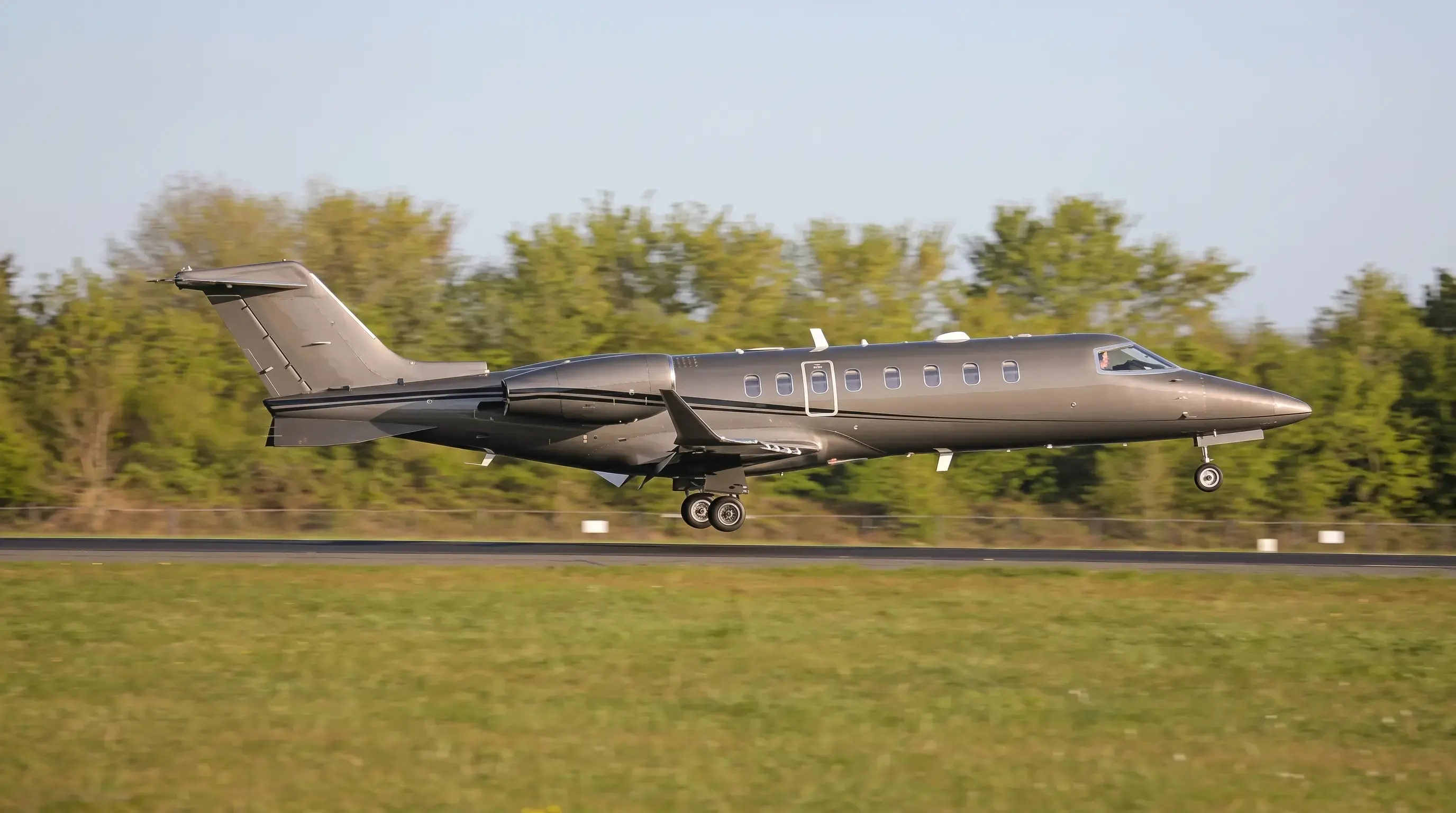
The Bombardier Learjet 75 meets this requirement with an elegantly designed, all-new structure, setting a new standard for private aviation. Grounded in the rich engineering legacy of the Learjet lineage, this twin-engine aircraft combines near-sonic cruising speeds with outstanding high-altitude performance, serving as a lucrative mobile office for today's corporate users.
Aerodynamic Features of the Bombardier Learjet 75
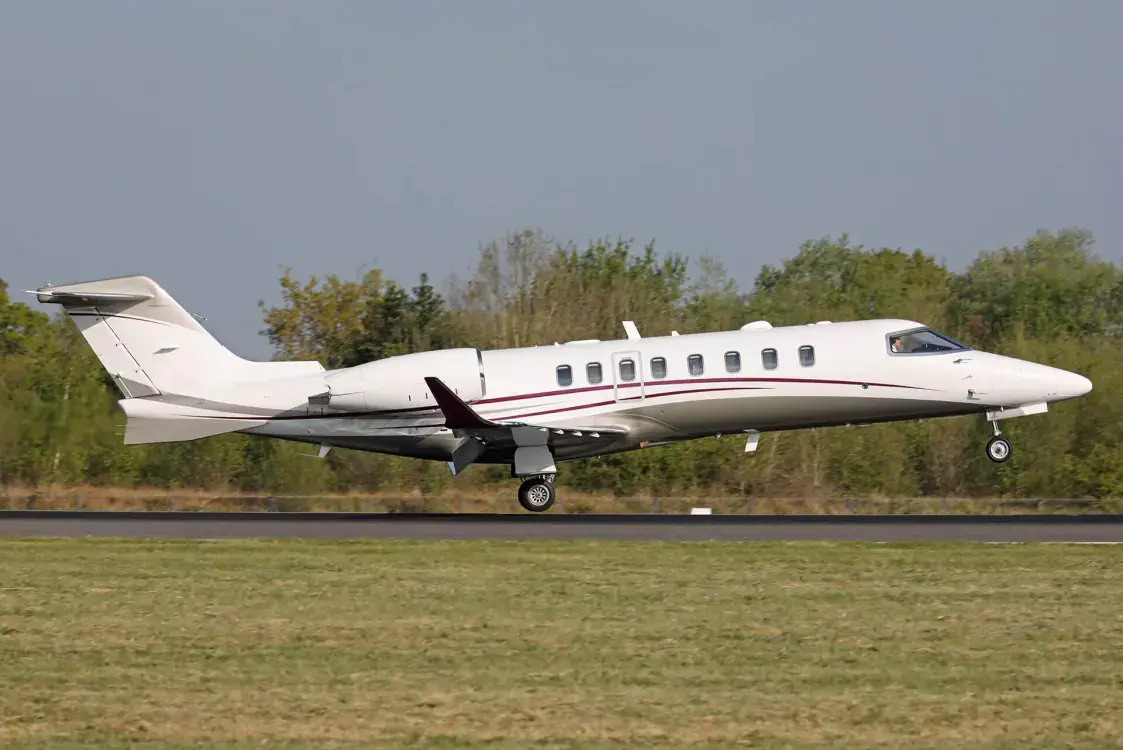
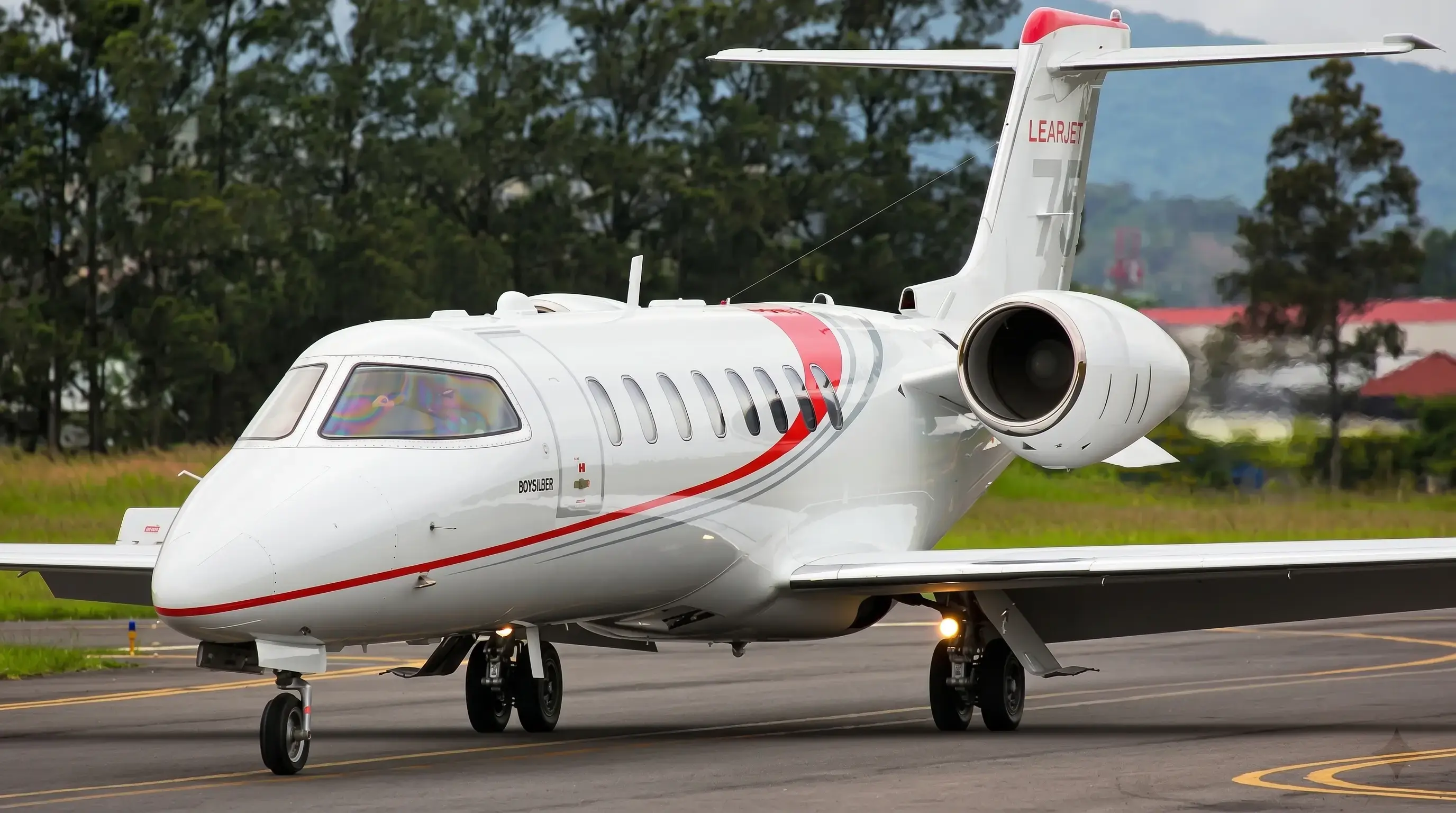
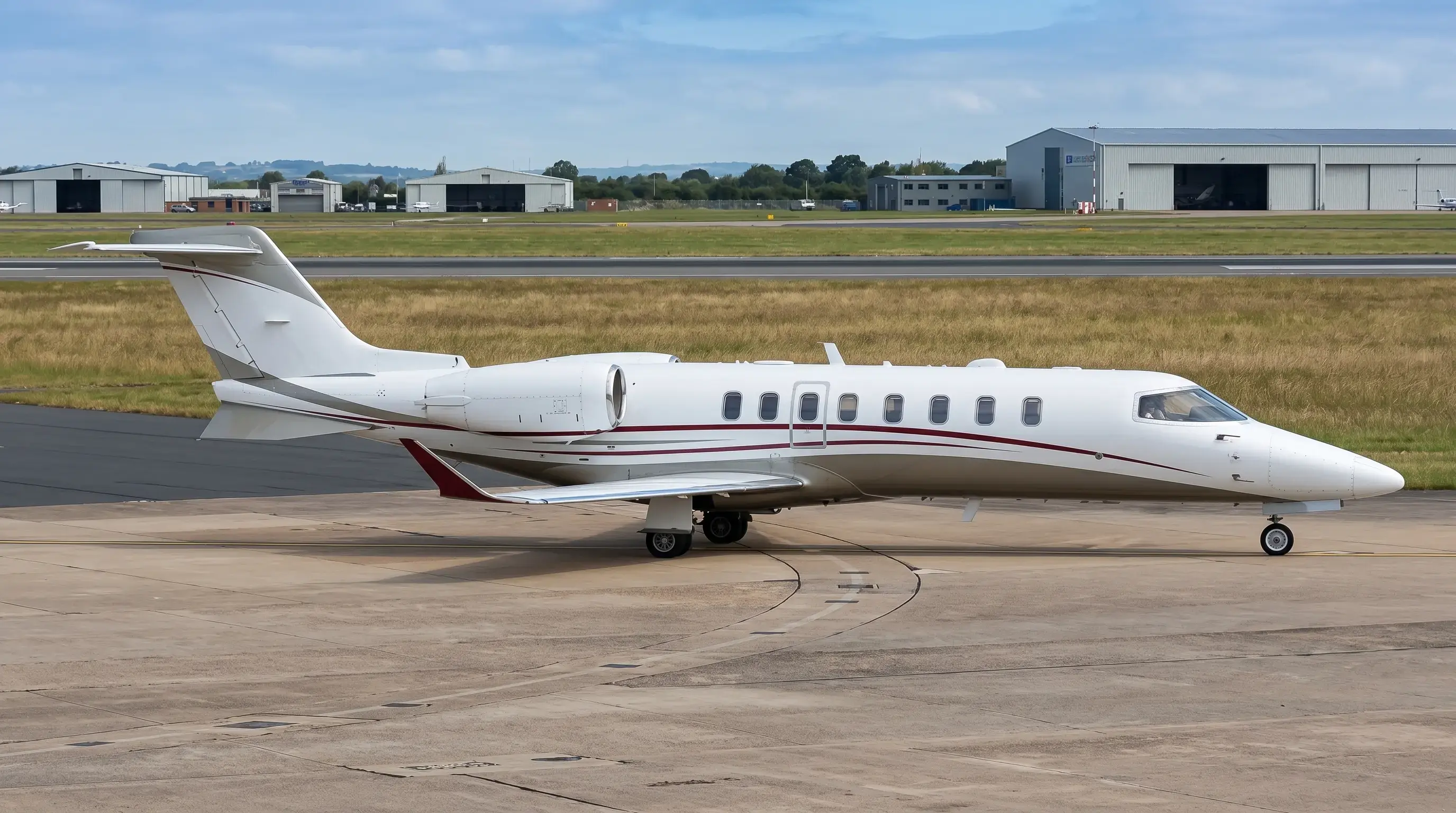
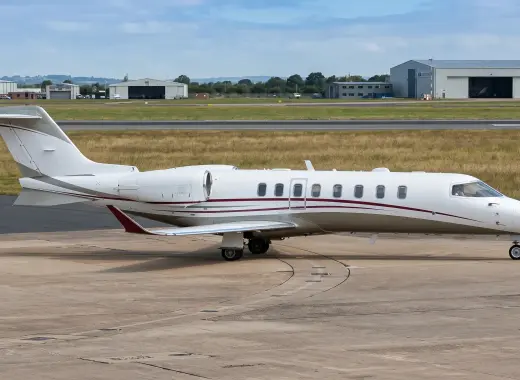
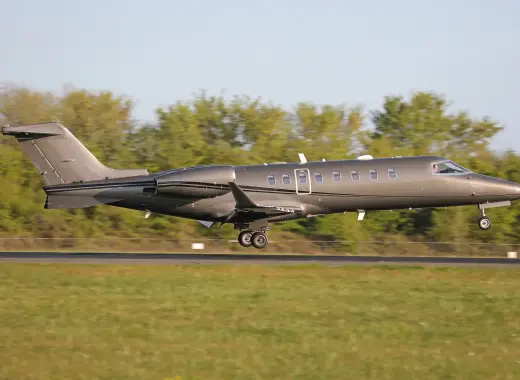
The design of this business jet prioritizes minimizing high-speed drag and enhancing flight stability. Departing from traditional straight-wing configurations, engineers have created an advanced wing design with distinctive, angled winglets inspired by large-cabin intercontinental jets.
This improvement lowers drag by two percent, enabling the aircraft to navigate turbulent air more efficiently than its competitors. Additionally, the airframe employs high-grade lightweight aluminum alloys to reduce weight while ensuring a robust and durable structure that meets the highest international aviation safety standards.
Enhanced Honeywell Engines and Climbing Performance
The aircraft's reliable engines and adaptability on different airfields come from a state-of-the-art propulsion system placed at the rear of the fuselage. Two Honeywell TFE731-40BR turbofan engines, each capable of delivering 3,850 pounds of thrust, power the jet. This dual-engine setup enables it to ascend to 45,000 feet in under twenty minutes when fully loaded, with a maximum operating altitude of 51,000 feet.
By climbing quickly above lower-altitude air traffic and adverse weather, the Learjet 75 achieves impressive fuel efficiency, averaging just 214 gallons per hour.
Spacious Flat-Floor Double-Club Cabin Design
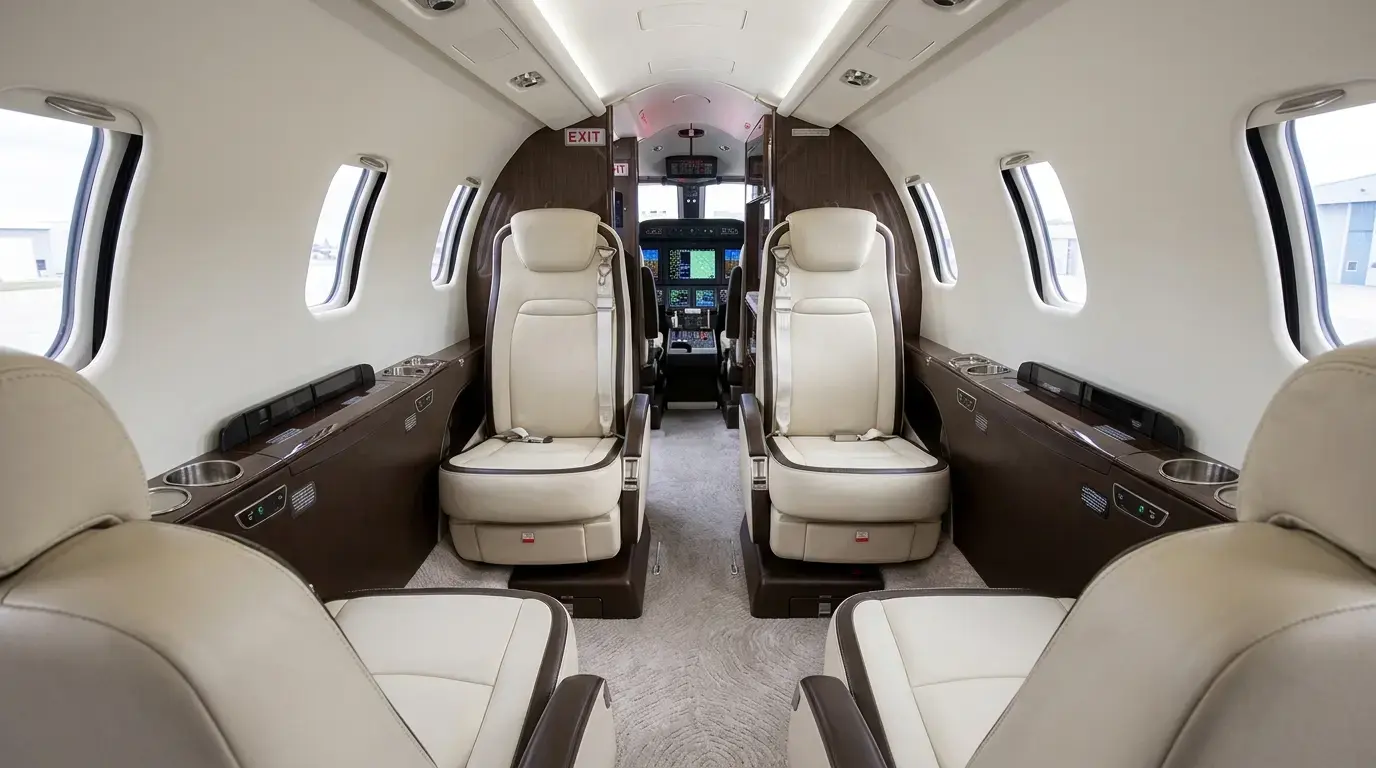
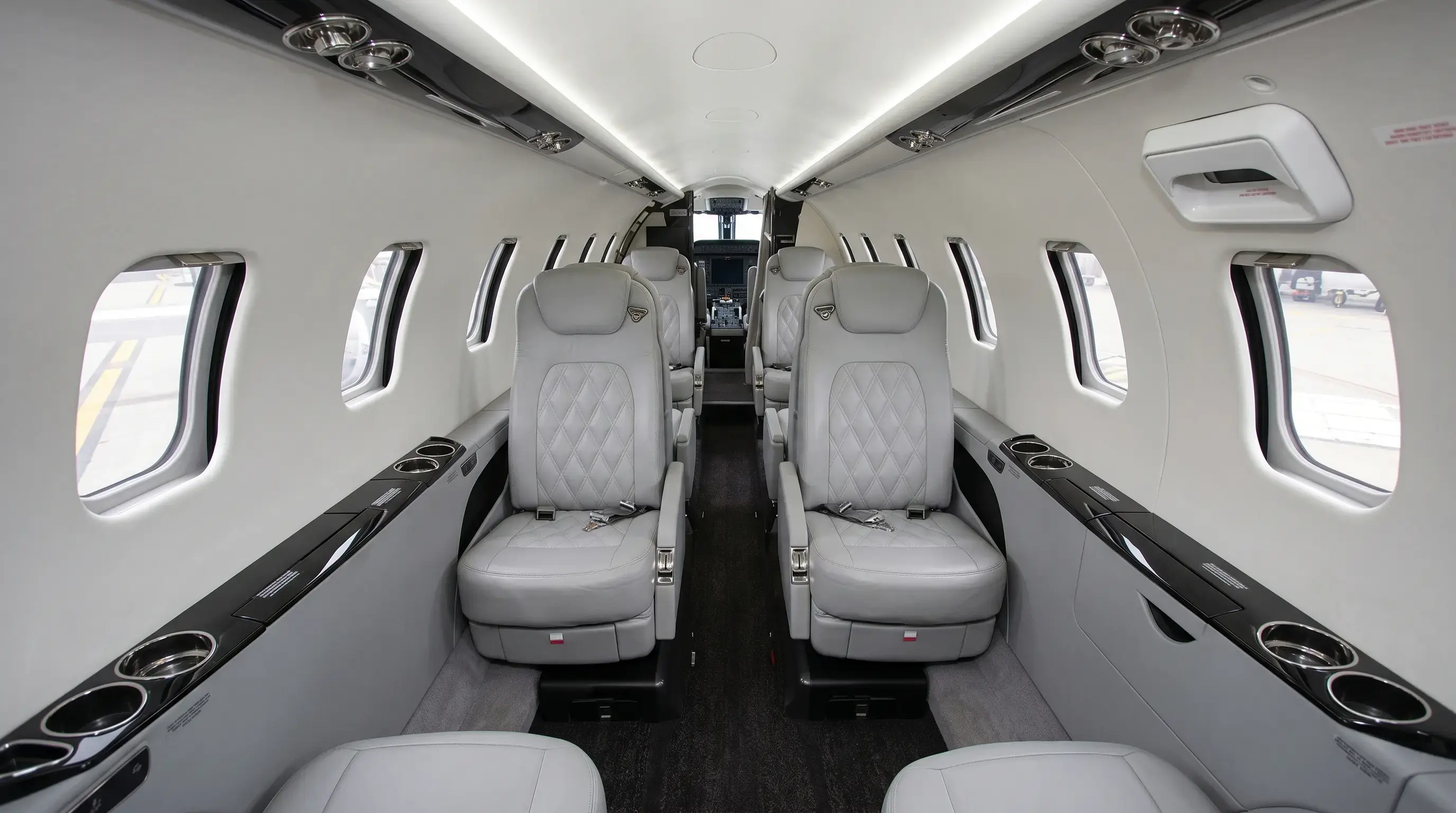
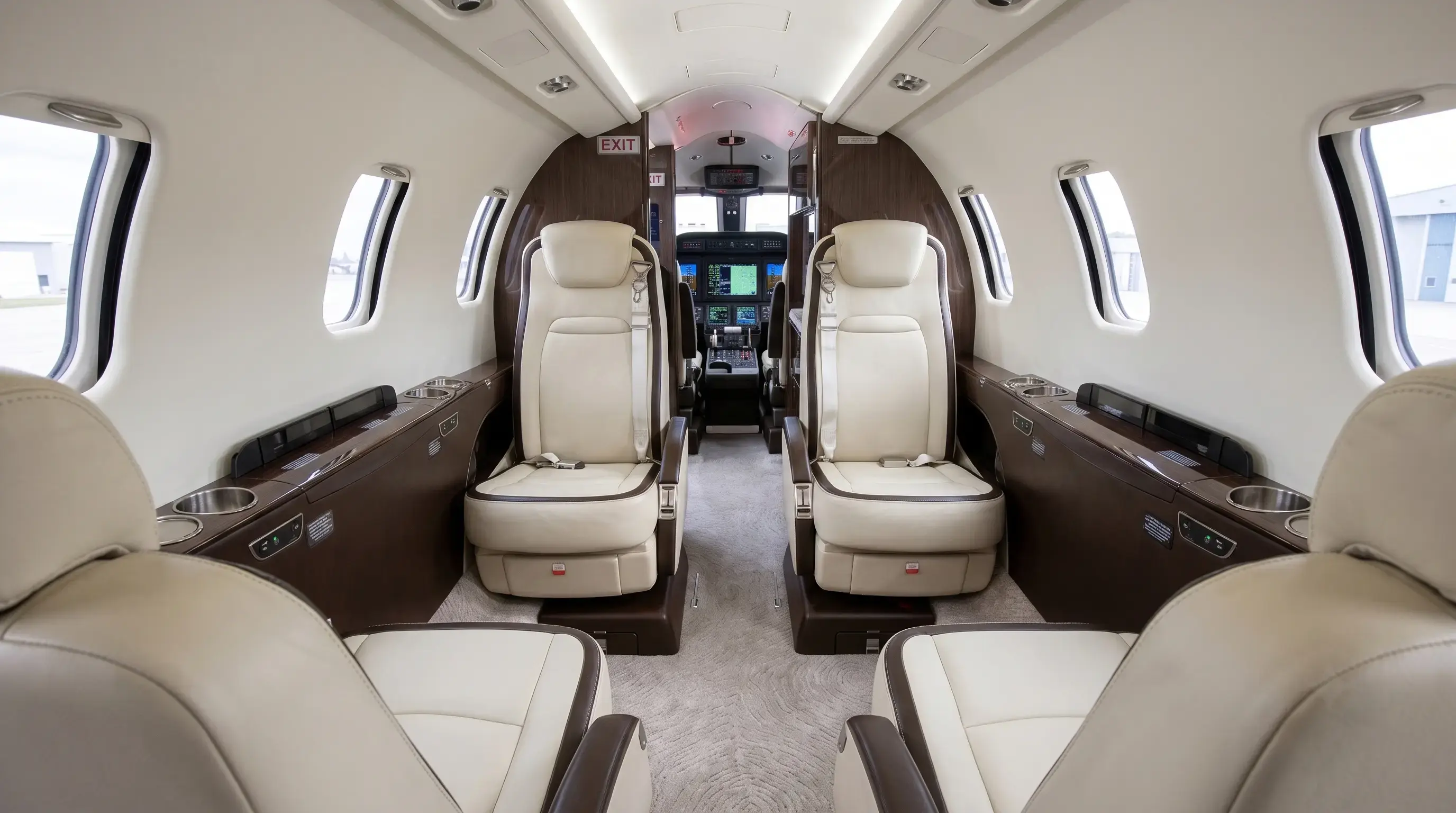
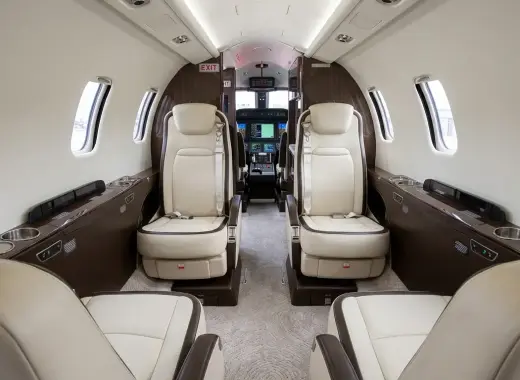
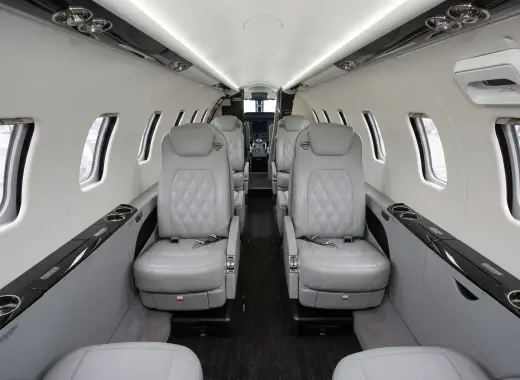
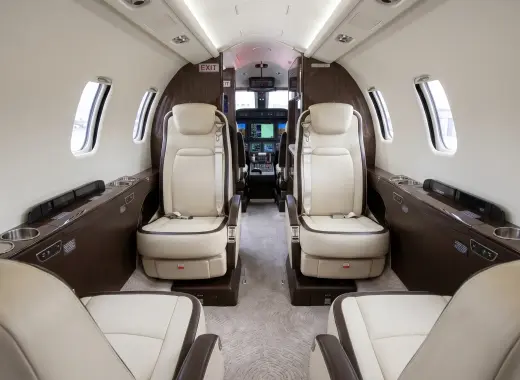
The aircraft's luxurious and quiet interior is designed for optimal passenger comfort and workspace functionality. The fuselage features a seamless flat floor, providing a standing height of 4 feet 11 inches and a width of 5 feet 1 inch, eliminating the awkward dropped center aisle found in older models.
The standard executive layout can comfortably seat eight individuals in a double-club arrangement, equipped with eight leather chairs that slide and swivel with ease. A solid pocket door at the front effectively separates the cabin from entry noise, complemented by a generous 65 cubic feet of heated storage for luggage.
Advanced Touchscreen Control with Garmin G5000 Avionics
The flight deck has undergone a significant technological transformation with the integration of automated digital flight management systems, replacing mechanical switches. Pilots operate the aircraft using the premium Garmin G5000 avionics suite, which provides a consolidated view of engine metrics, weather overlays, and navigation across three expansive fourteen-inch high-resolution displays.
This cutting-edge cockpit network includes dual flight management systems, automated graphical flight planning, and a fully digital synthetic vision safety system, significantly alleviating pilot workload during complex instrument approaches and ensuring safe, precise routing in varying conditions.
Conclusion
The Bombardier Learjet 75 exemplifies excellence in private aviation design, harmonizing light jet operating costs with the high speeds characteristic of midsize aircraft. Its innovative canted winglets, powerful Honeywell engines, spacious flat-floor interior, and advanced touchscreen technology solidify its position as a valuable asset for corporations and private charter operators globally.
Frequently Asked Questions
What is the maximum non-stop flight range of the Bombardier Learjet 75?
The aircraft boasts a notable maximum NBAA IFR flight range of around 2,040 nautical miles with a standard crew and four passengers. This capability enables non-stop flights exceeding four hours, connecting city pairs like Los Angeles to Chicago or New York to Miami.
How does the Learjet 75 compare to the older Learjet 45XR model?
The Learjet 75 features several advancements over the 45XR, including improved fuel efficiency through advanced canted winglets, higher-thrust Honeywell engines, an all-digital Garmin G5000 touchscreen avionics suite, enhanced soundproofing, and a redesigned forward galley pocket door.
What are the takeoff and landing distance requirements?
Under typical sea-level conditions with maximum takeoff weight, the jet requires approximately 4,440 feet for takeoff. For landing, it can safely come to a stop in about 2,325 feet under standard landing weights.
Can passengers access their luggage during the flight?
No, the main baggage hold, which measures between 50 and 65 cubic feet, is situated in an insulated external storage compartment at the rear of the aircraft. While this compartment is heated to protect belongings from freezing, it cannot be accessed while in flight.
What is the unique benefit of the Learjet 75 Liberty variant?
The Learjet 75 Liberty offers an economical alternative while retaining the same high-performance engines and advanced Garmin avionics. It features a modified six-seat cabin layout with fold-down ottomans and executive tables, creating an enhanced executive suite style at a lower initial cost.