















As the landscape of corporate aviation evolves, there's a noticeable shift toward light jets that can utilize shorter regional runways while still delivering strong performance for cross-country journeys. Operators aiming to expand or manage busy private travel fleets must consider how effectively a light jet can avoid the congestion faced by commercial airlines without incurring excessive maintenance costs. Pilatus PC-24
The Embraer Phenom 300 confronts this operational need head-on with an innovative design that combines the affordability of Jet Transport light jets with the capabilities of midsize private aircraft. For over ten years, this agile jet has been a crucial transport solution for global companies, delivering exceptional fuel efficiency, impressive cruise speeds, and a conducive in-flight workspace.
Enhanced Aerodynamics and Structural Integrity of the Embraer Phenom 300
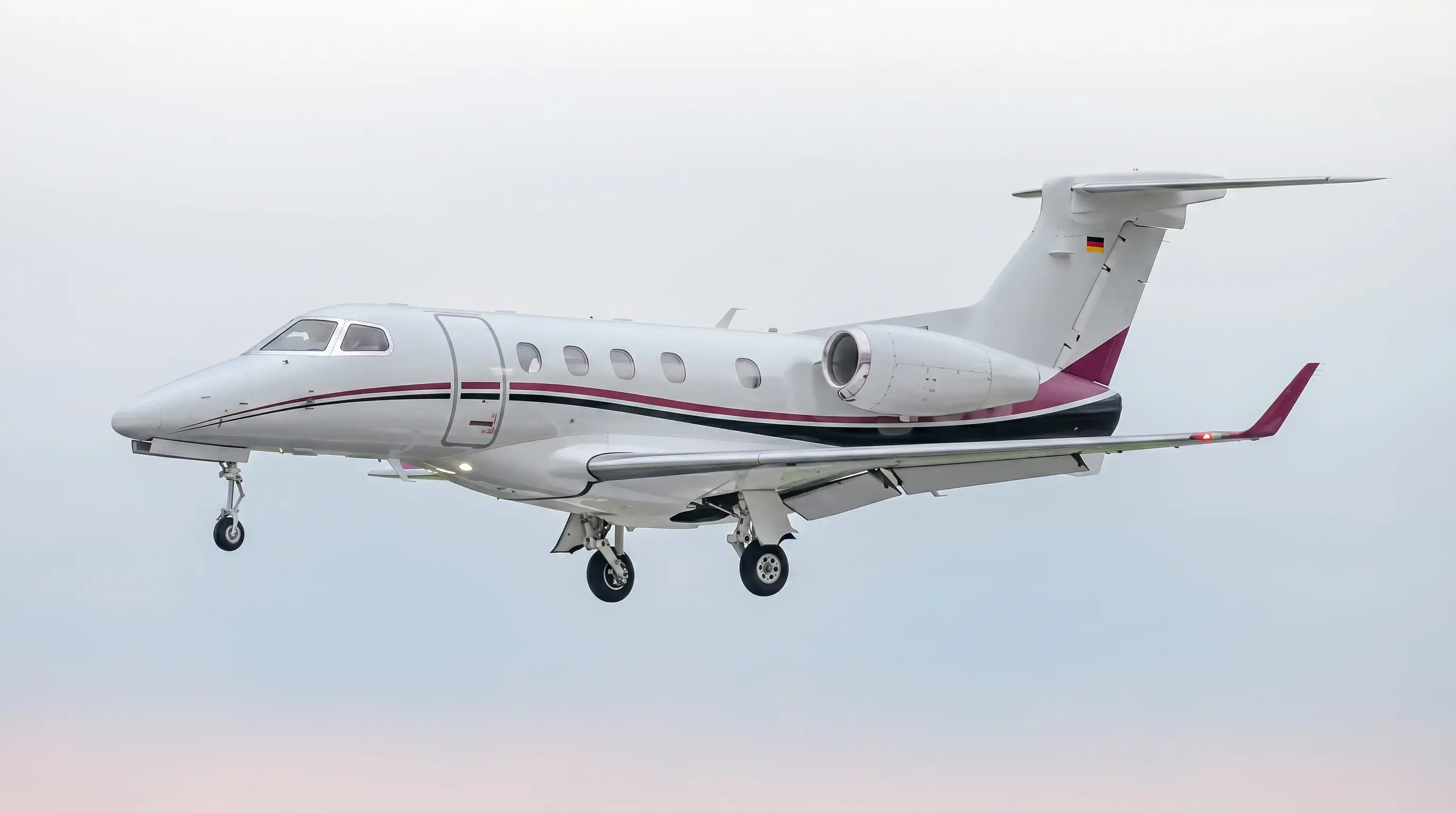
The engineering of this business aircraft is carefully crafted to ensure optimal fuel efficiency and robustness. Straying from typical stretched airframe designs, the engineers introduced low-mounted swept wings with specialized winglets that minimize aerodynamic drag.
The main fuselage features about 18% composite materials, effectively reducing structural weight while ensuring a durable airframe designed for an impressive 35,000 flight hours. This advantageous combination ensures a stable flight experience even in turbulent conditions, offering passengers a consistently comfortable ride.
High-Performance Engines and Short-Runway Capability
The jet’s impressive thrust and high-altitude cruise performance stem from its rear engine configuration. Equipped with two rear-mounted Pratt & Whitney Canada PW535E turbofan engines, each producing 3,360 pounds of takeoff thrust, the aircraft can cruise at speeds as high as Mach 0.78 and ascend to a service ceiling of 45,000 feet, allowing it to soar above commercial air traffic. Crucially, this twin-engine setup enables takeoffs from short regional runways of just 3,209 feet while at maximum weight, providing executives with access to smaller airports closer to their destinations.
Innovative Cabin Design and Spacious Baggage Area
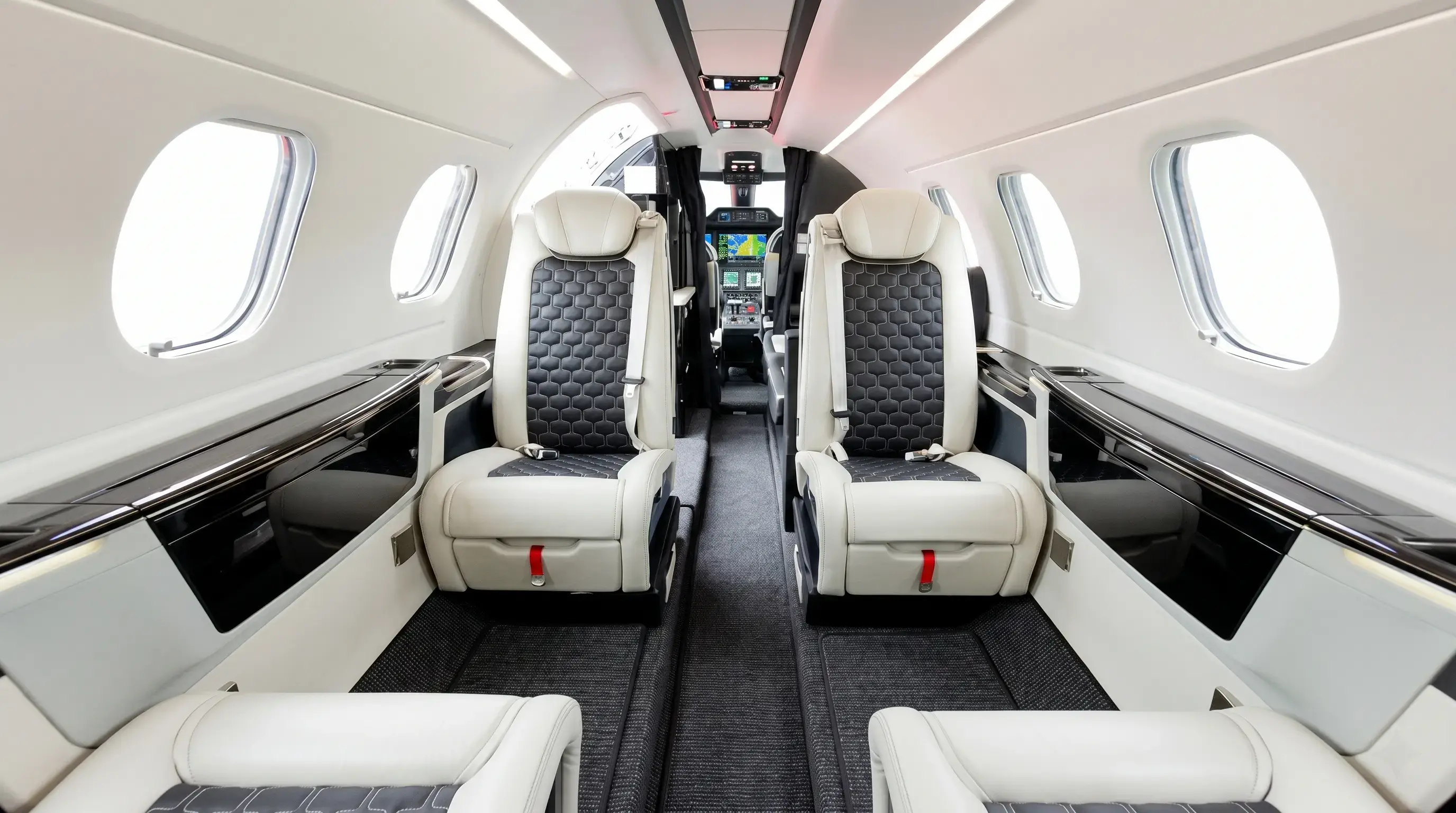
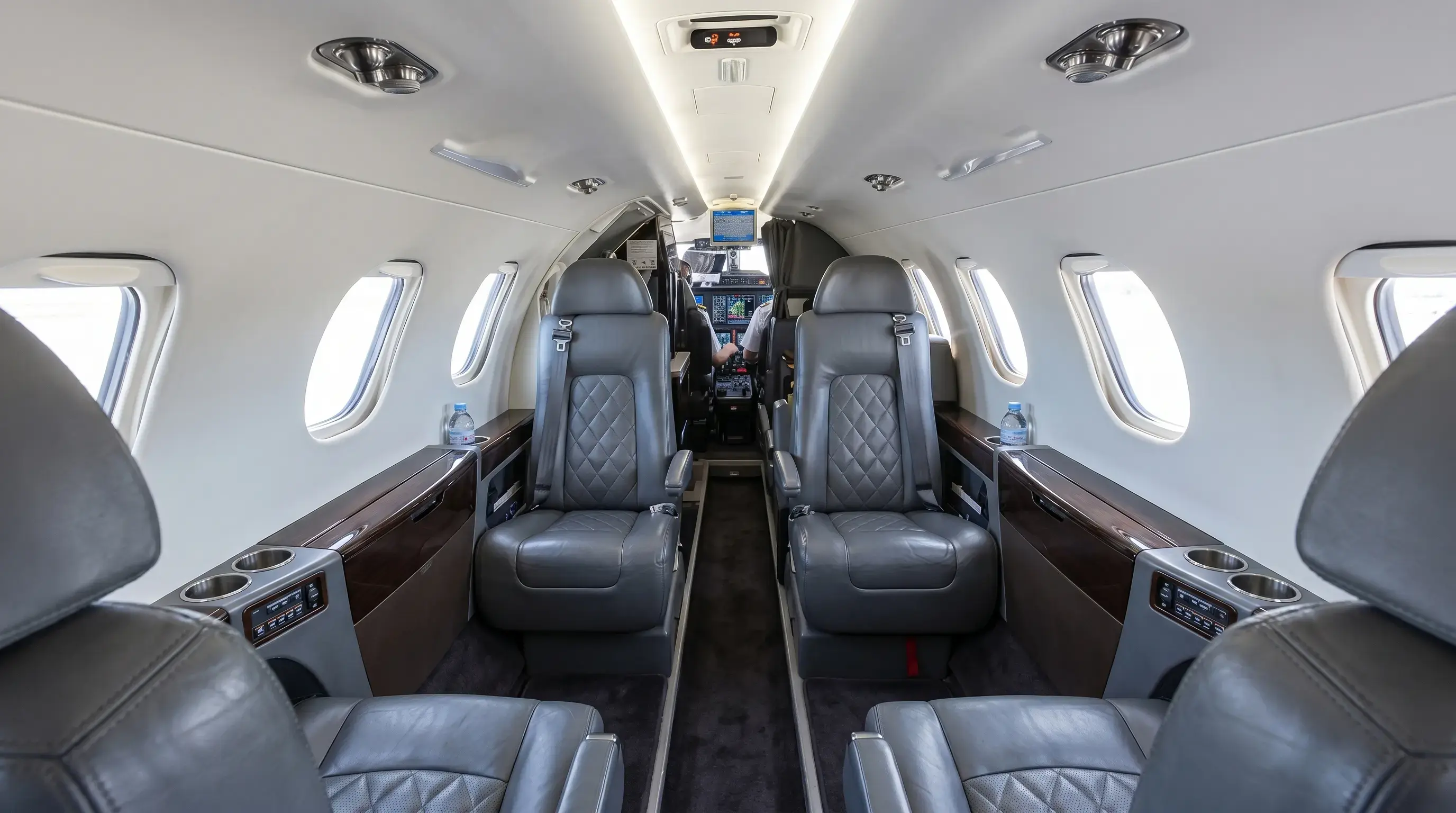
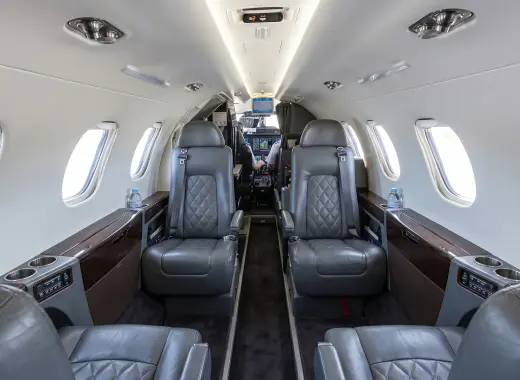
The interior of the Phenom 300 is meticulously designed for passenger comfort and productivity. Utilizing a unique Oval Lite cabin cross-section, the design flattens the side walls and arches the ceiling, offering a standing height of 4 feet 11 inches and a width of 5 feet 1 inch.
This framework ensures significantly more space for shoulder and legroom for up to nine passengers compared to conventional round cabin designs. The standard setup includes reclining leather club seats, an externally accessible rear lavatory, and a well-equipped front galley. Additionally, it boasts a generous 84-cubic-foot pressurized rear baggage compartment, providing one of the largest storage capacities in its class.
Next-Generation Automation and Precision Cockpit Systems
The flight deck is designed for situational awareness and simplified operations to accommodate single-pilot certification. It features a Garmin-based Prodigy flight deck suite, which organizes navigation data, engine readings, and diagnostic instruments across three spacious twelve-inch LCD screens.
This integrated system includes a three-axis digital autopilot, synthetic vision maps, and advanced terrain management software, significantly reducing pilot workload during complex approaches and enhancing safety and positioning during variable weather conditions.
Conclusion
The Embraer Phenom 300 series exemplifies modern private jet engineering, skillfully marrying the operational cost-effectiveness of Jet Transport light jets with the speed and range characteristics typical of larger aircraft. With its advanced aerodynamic design and efficient Pratt & Whitney engines, it has become an indispensable tool for corporate aviation. Its spacious cabin, ample luggage capacity, and high-tech avionics systems further solidify its reputation as a trusted asset for flight operations globally.
Frequently Asked Questions:
What is the Embraer Phenom 300’s maximum non-stop range?
The aircraft boasts a maximum NBAA IFR range of approximately 1,971 to 2,010 nautical miles with a standard load of four passengers, allowing for non-stop flights of up to four and a half hours, connecting cities like New York to Aspen or London to Moscow.
What distinguishes the original model from the upgraded Phenom 300E?
The Phenom 300E features an entirely revamped interior with better sound insulation, a newer Garmin G3000 avionics system, enhanced Pratt & Whitney engines that boost maximum cruise speed to Mach 0.80, and an advanced runway overrun warning system.
What runway distances are necessary for takeoff and landing?
In standard sea-level conditions at maximum takeoff weight, the Phenom 300 requires a takeoff distance of about 3,209 feet. For landing, the aircraft can decelerate and come to a stop in roughly 2,212 feet under typical landing weights.
Can passengers access the baggage compartment during flight?
No, the primary baggage compartment, which holds 74 to 84 cubic feet, is located in an external area at the rear of the fuselage. This compartment is pressurized and heated for protection against cold temperatures, but it is separate from the pressurized cabin and cannot be accessed mid-flight.
What is the maximum altitude and cabin pressure rating?
The jet is certified to operate at an altitude of up to 45,000 feet, allowing it to fly above turbulent lower layers. While cruising at such heights, its environmental system ensures a cabin altitude pressure of 6,600 feet, significantly reducing passenger fatigue and jet lag.